Bible Helper Tips All book collections

Old Testament · BOOK 3 OF 66

Leviticus

5 of 5 illustrations available

Read the Leviticus summary →
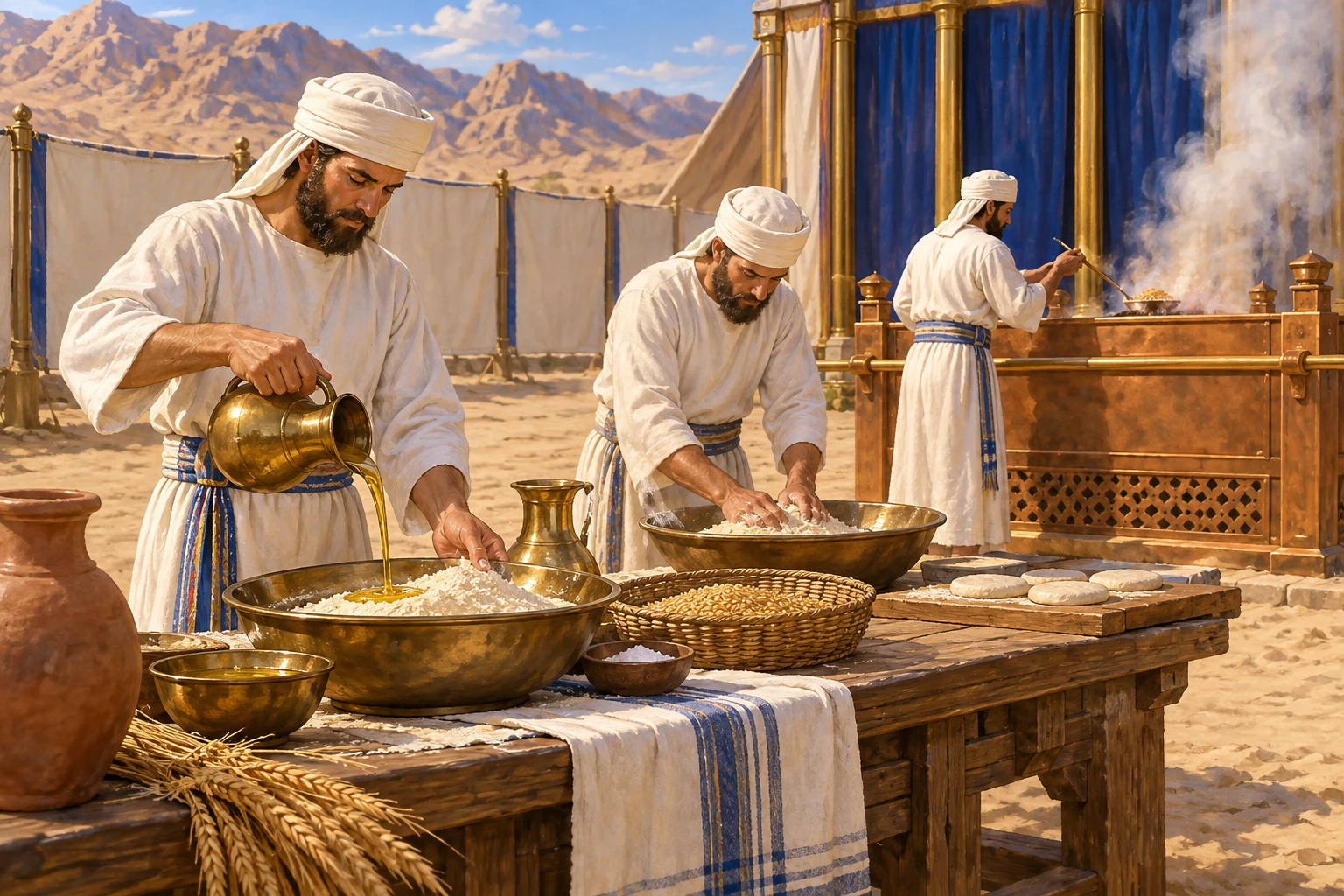
Illustration: Priests in plain white linen preparing flour and oil grain offerings near a bronze altar in the wilderness tabernacle courtyard. No blood or animals being harmed.

Offerings — Worship at the Tabernacle

Leviticus 1–7

Leviticus describes offerings expressing worship, thanksgiving, and atonement.
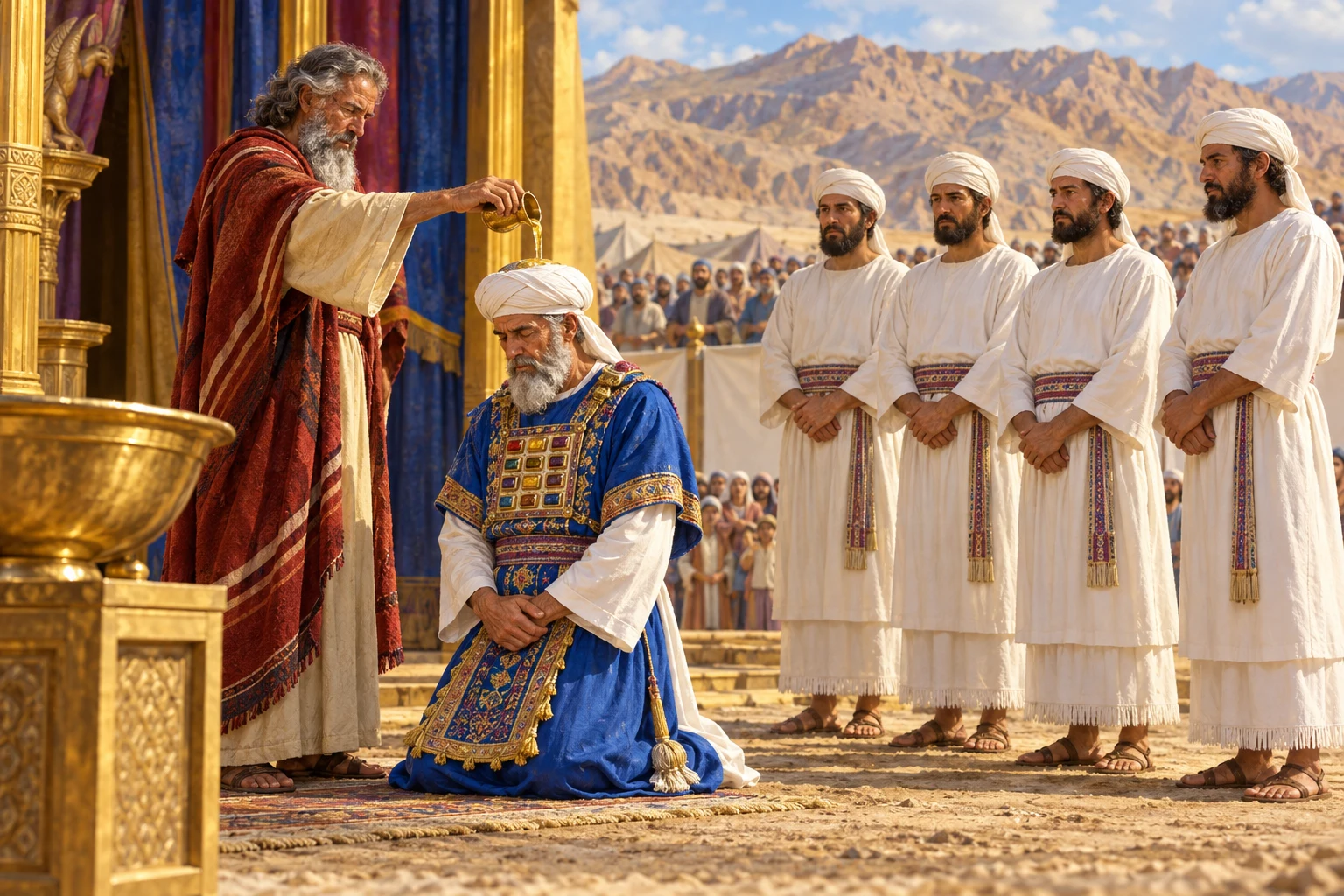
Illustration: Moses anointing Aaron at tabernacle entrance with Aaron's adult sons in white linen nearby. Aaron wearing blue robe, ephod and jeweled breastplate, white turban; congregation beyond.

Aaron and His Sons — Set Apart to Serve

Leviticus 8–9

Moses consecrated Aaron and his sons to serve as priests. Their garments and anointing marked their responsibilities before God and the congregation.
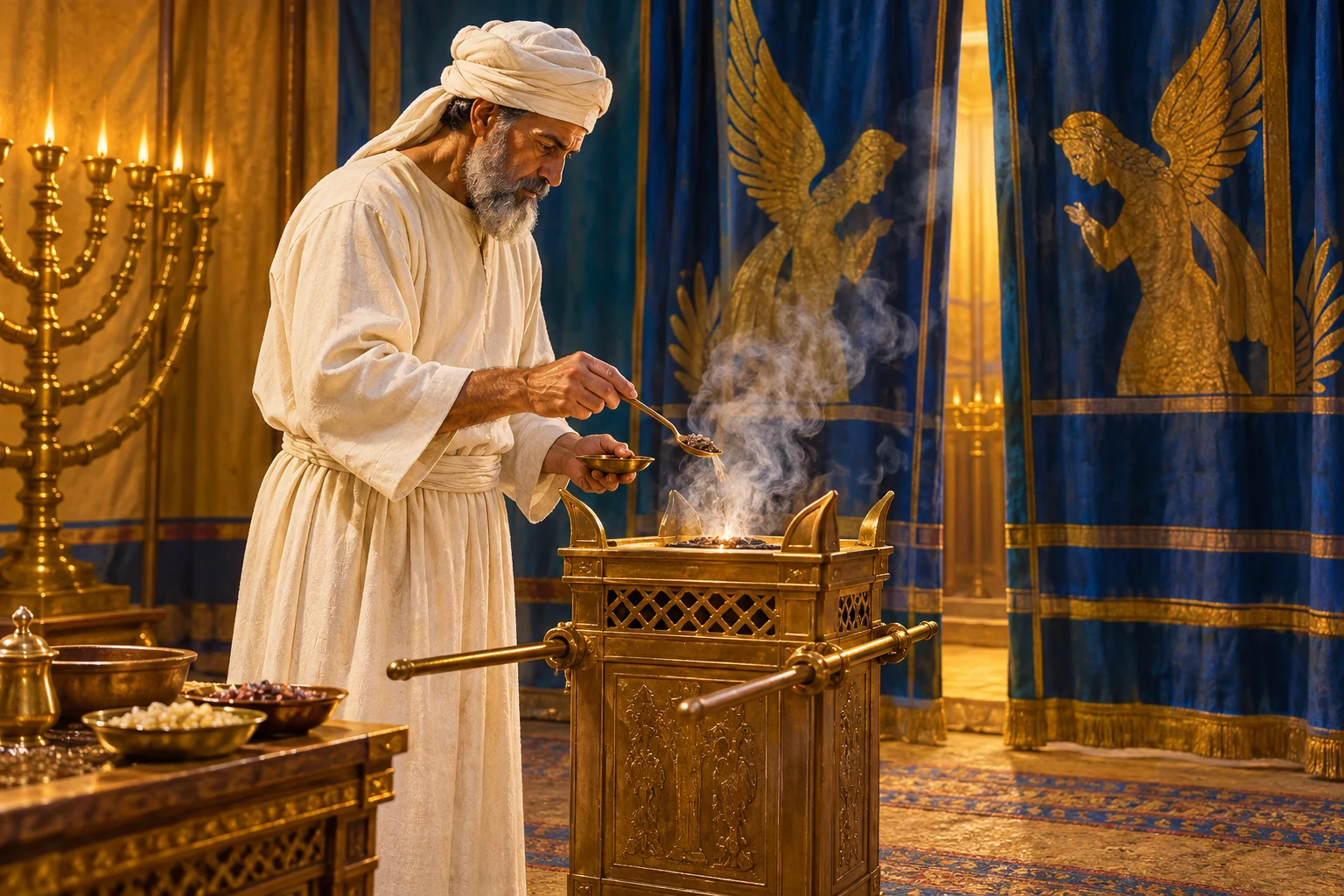
Illustration: High priest wearing ONLY simple white linen robe and white linen turban, preparing incense in bronze censer near veil inside tabernacle, soft rising incense. No ornate ephod or breastplate, no graphic sacrifice.

The Day of Atonement

Leviticus 16

The Day of Atonement emphasized cleansing and reconciliation. The high priest entered the sanctuary in linen garments with incense, and a live goat was sent into the wilderness.
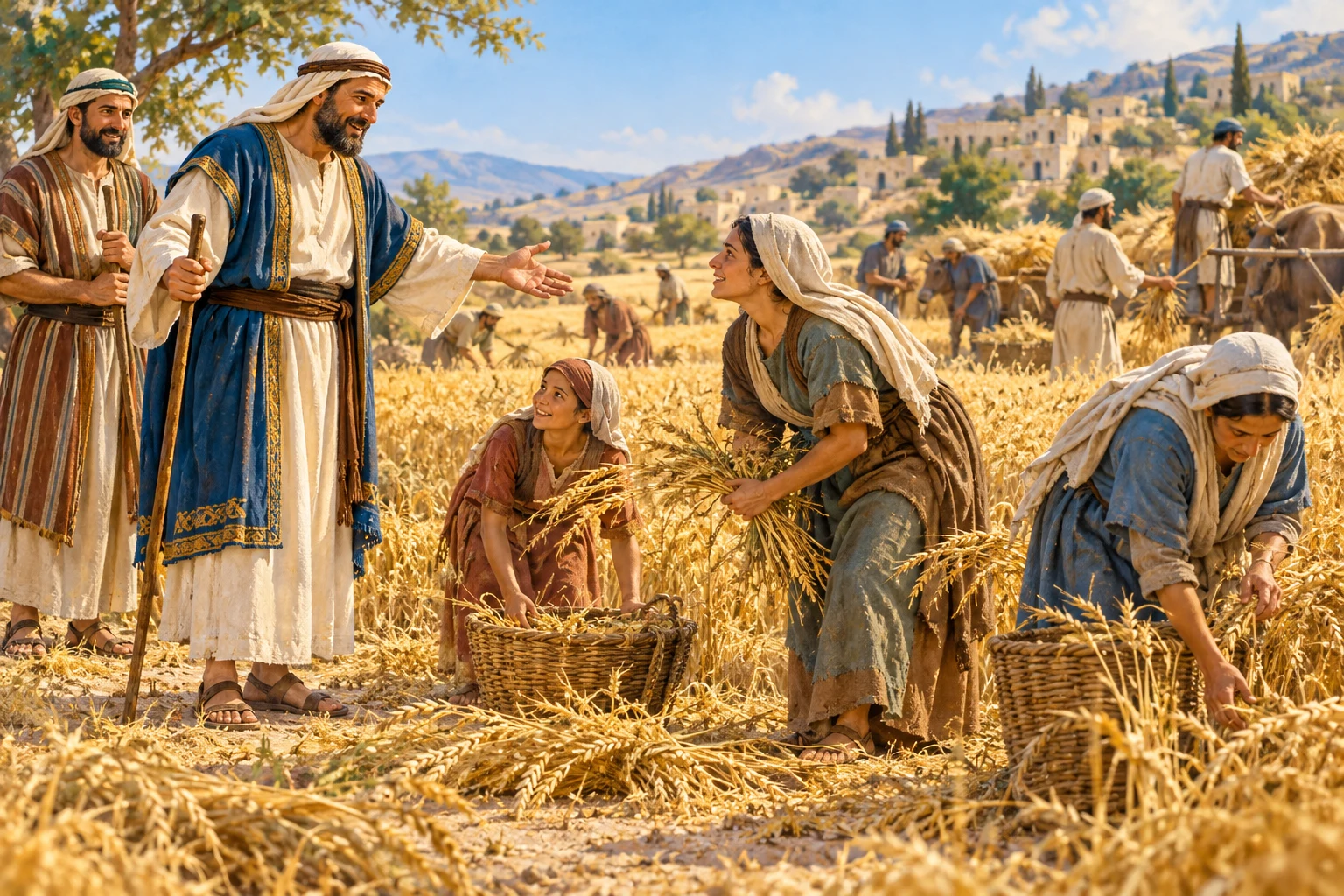
Illustration: Ancient Israelite grain harvest, landowner warmly allowing poor travelers to gather grain at unharvested field edges, baskets and generous human kindness, modest ancient clothing.

Love Your Neighbor — Leave Grain for the Poor

Leviticus 19:9–18

God instructed Israel to leave the edges of fields and fallen grain for the poor and the stranger. The command to love one’s neighbor connects holiness with practical care.
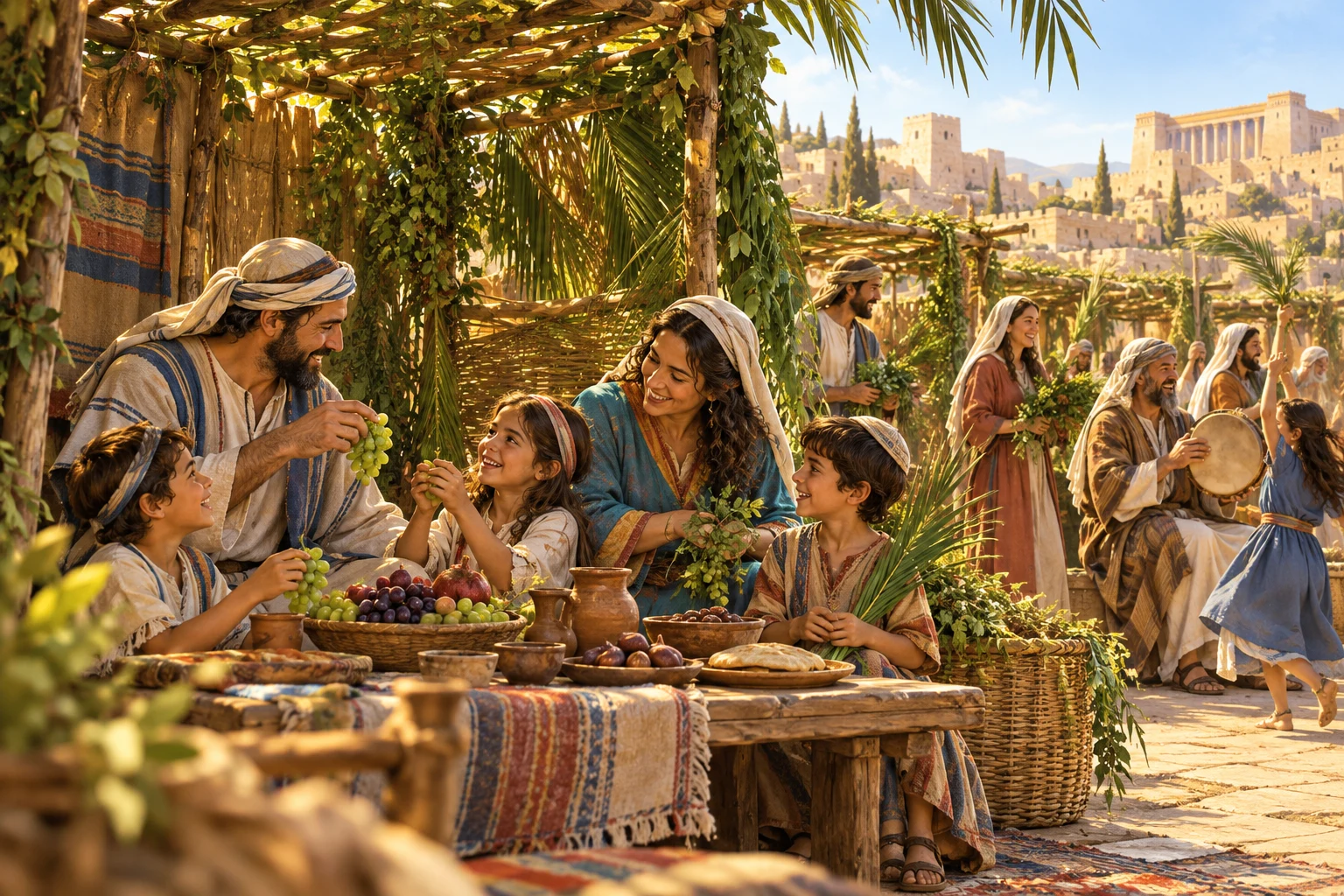
Illustration: Ancient Israelite families celebrating Feast of Tabernacles in simple booths made of leafy branches and palm fronds, warm joyful modest scene, no modern religious objects.

The Feast of Tabernacles — Remembering the Journey

Leviticus 23:33–43

Israel was instructed to dwell in booths during this feast, remembering how God sheltered His people after bringing them out of Egypt. Families gathering in leafy shelters reflect remembrance, gratitude, and joy.